FOR KATE FOR SOURCE INFO TO CITE LATER: https://www.usatoday.com/picture-gallery/life/2020/09/06/the-worlds-most-important-event-every-year-since-1920/42346845/
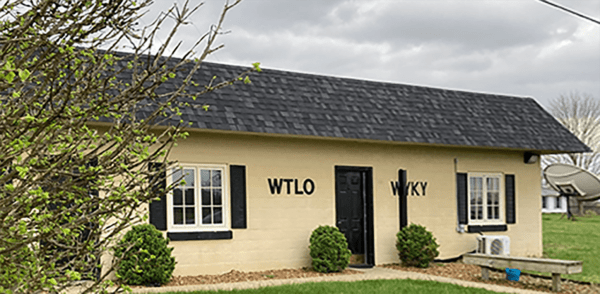
WTLO AM 1480 & 97.7 FM America's Best Music
Somerset 106.1 FM Your Perfect Music Mix
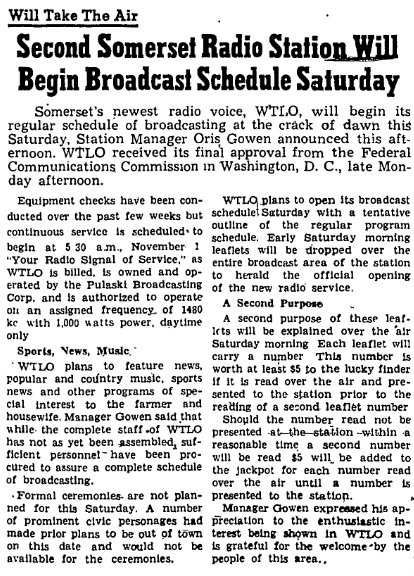
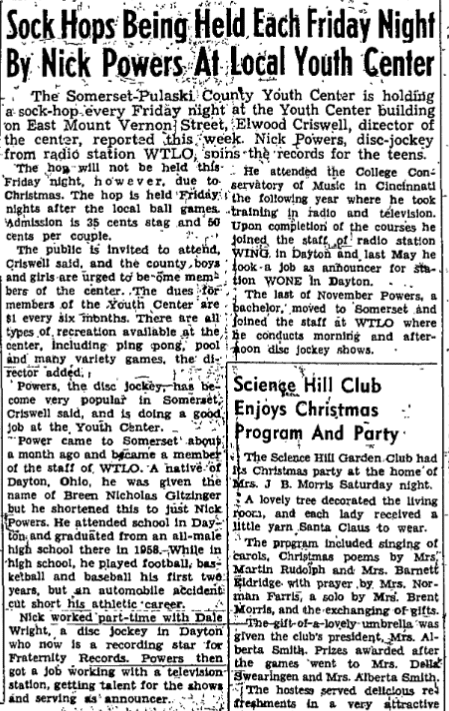
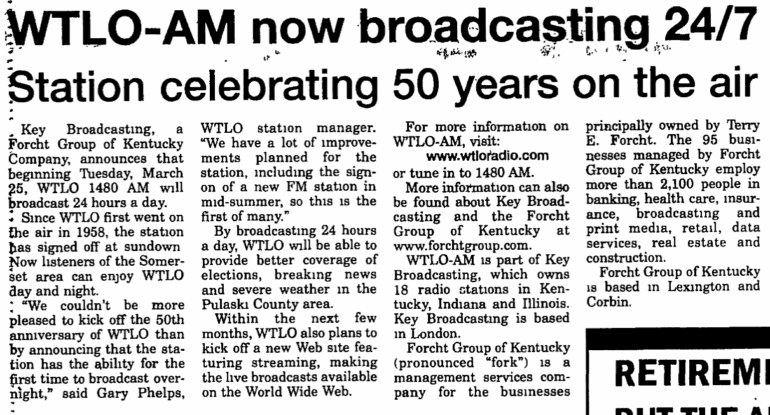
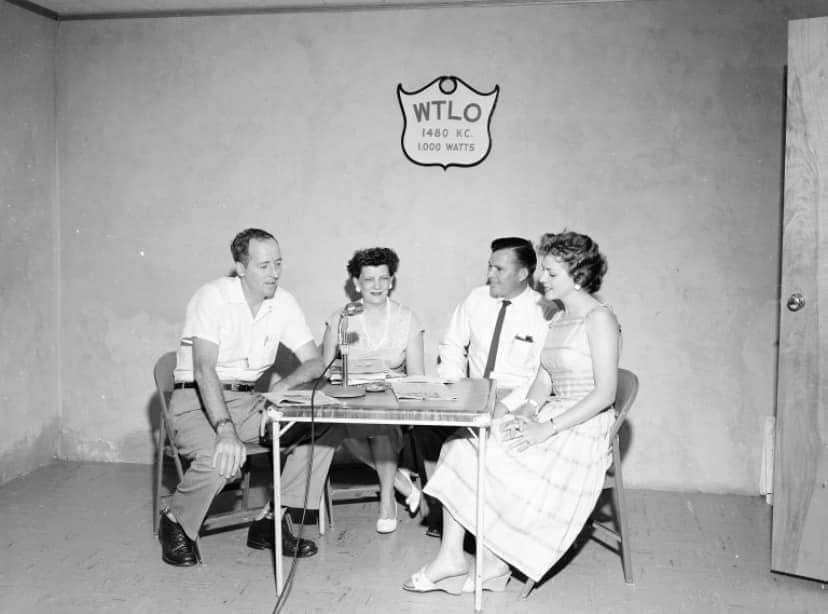
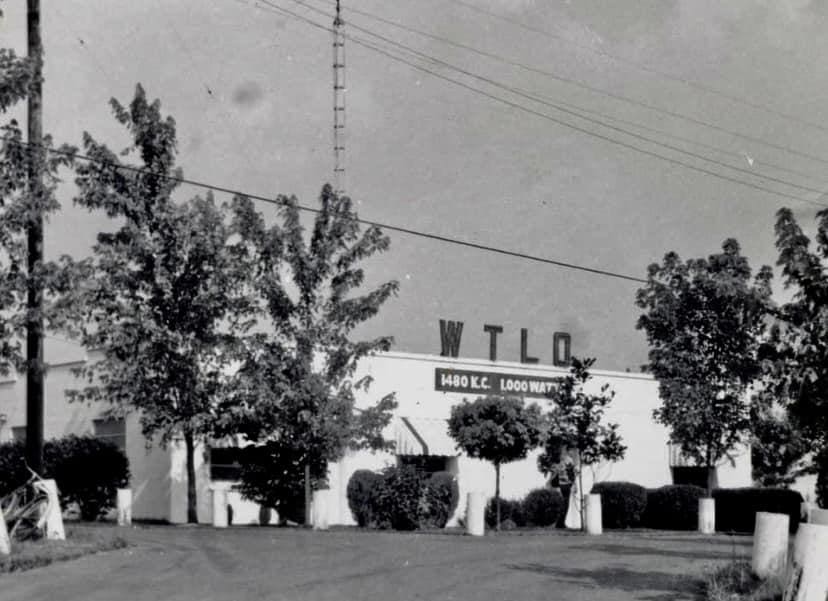
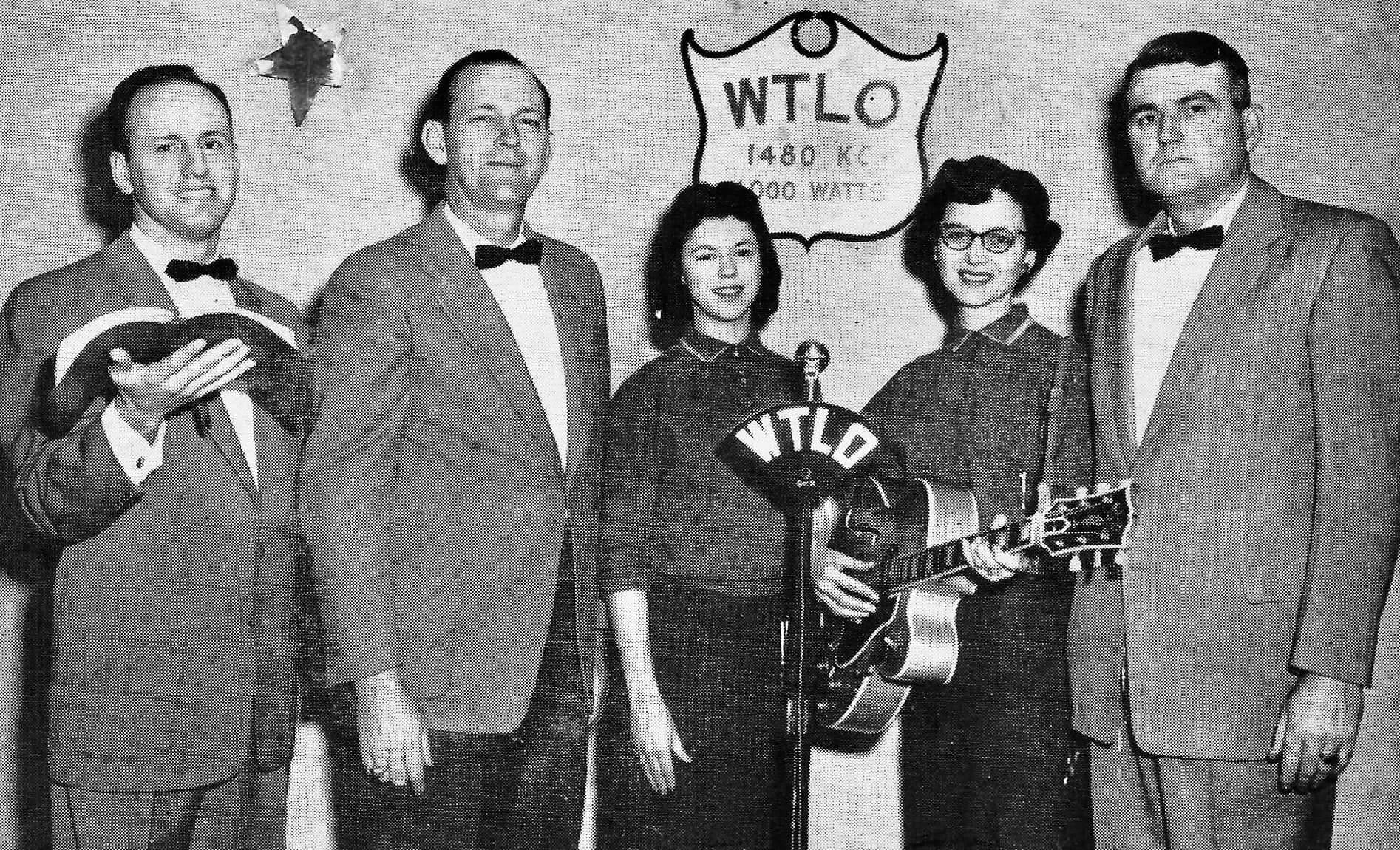
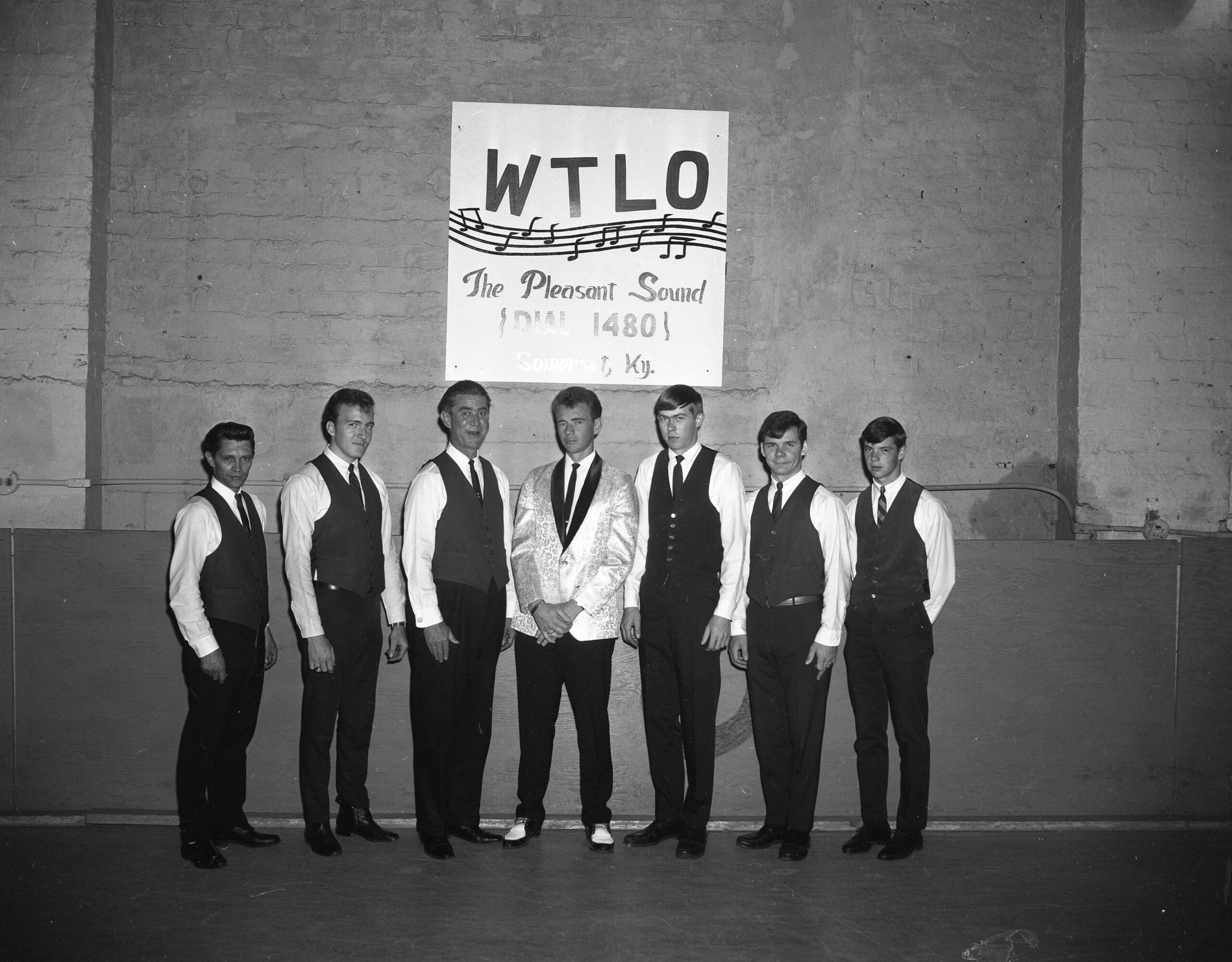
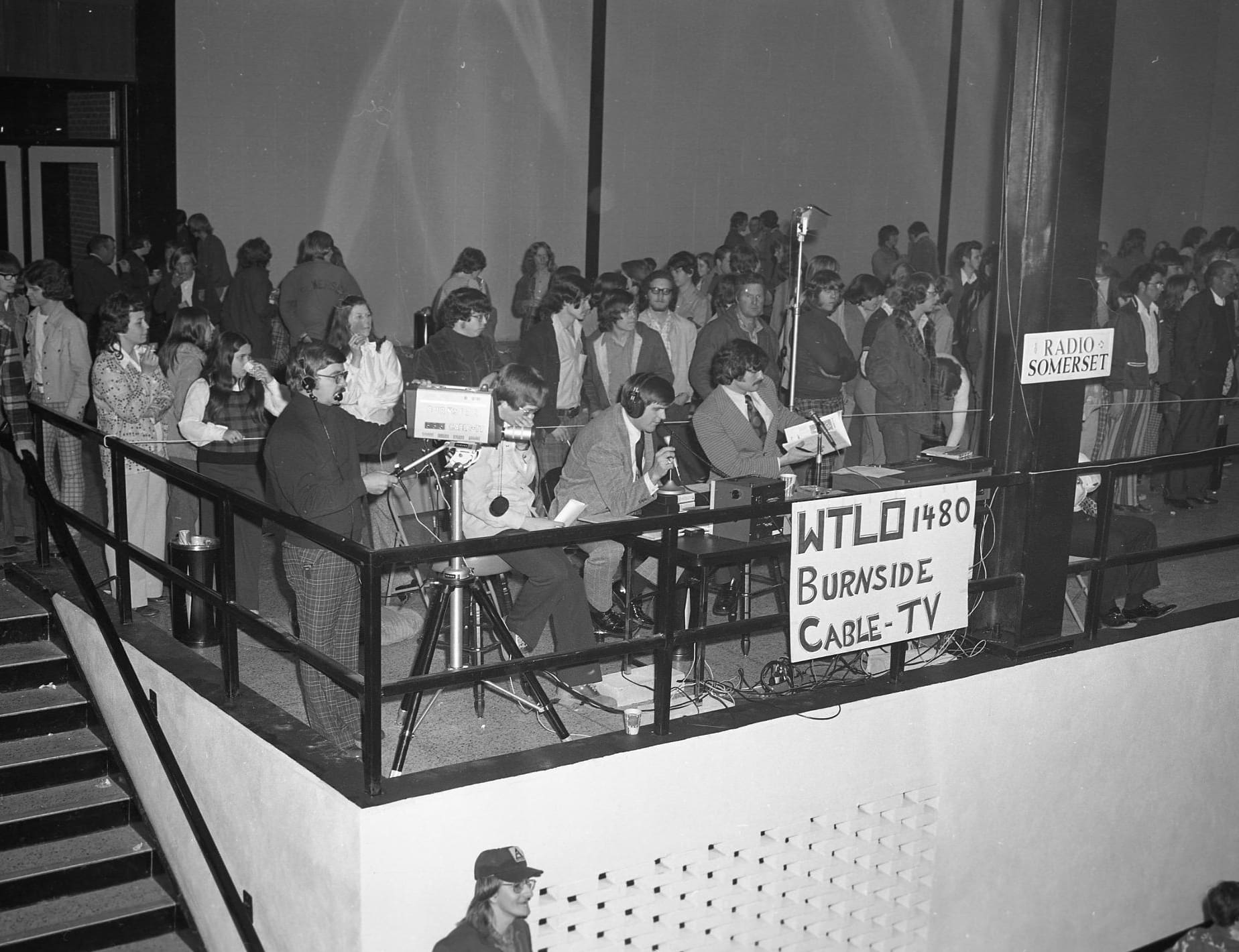
On the evening of Monday, October 27, 1958, WTLO received it’s final approval to broadcast from the Federal Communications Commission.
WTLO was authorized to operate an assigned frequency of 1480 AM with 1,000 watts power in the daytime only.
WTLO was owned by Pulaski Broadcasting Corp.
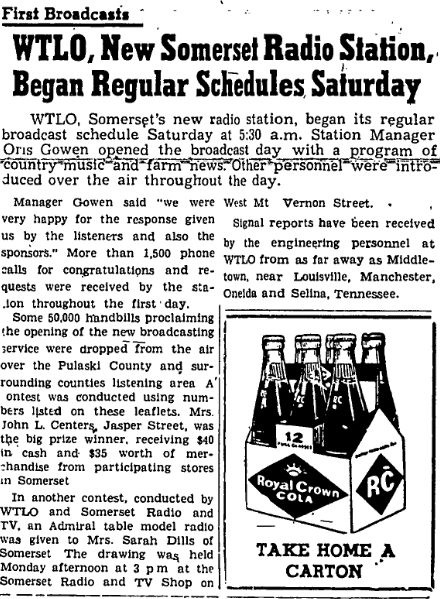
WTLO, “Your Radio Signal of Service,” went on-air for the first time at 5:30 AM on November 1, 1958. The broadcast day was opened with country music and farm news.
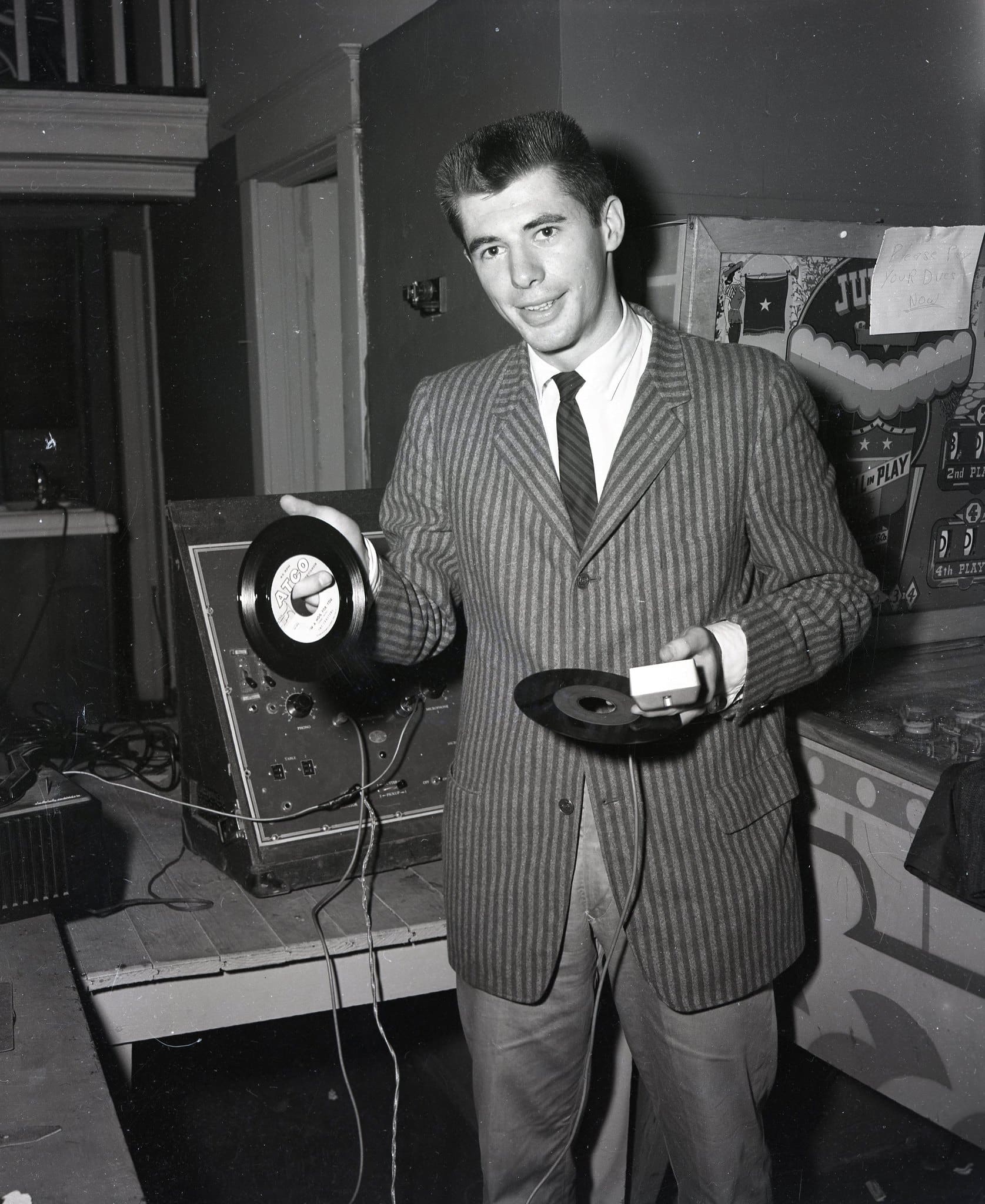
WTLO Staff at the time:
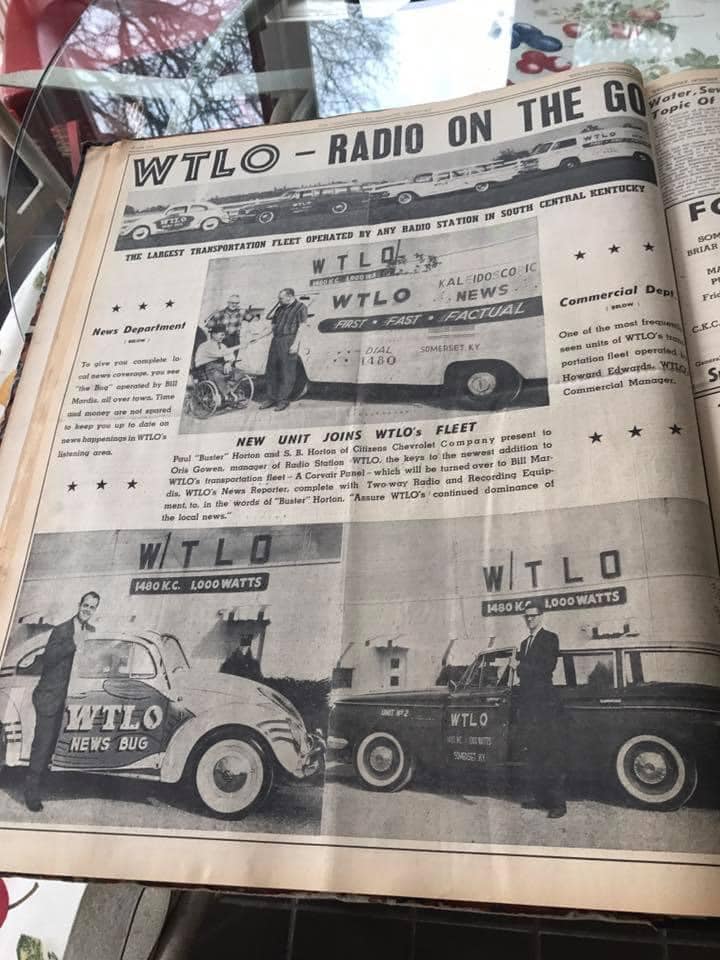
Oris Gowen-Station Manager
Mrs. Gowen
Bill Morris
Cal Smith
Bill Bybee
Bobby Thompson
Howard Edwards
Mrs. Don Temmen
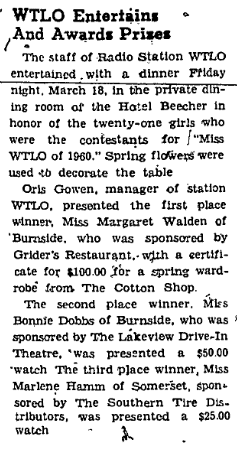
A dinner and awards presentation was held at Hotel Beecher in Somerset for the 21 contestants of Miss WTLO 1960. Prizes and money were given to the top 3.
1st: Margaret Walden of Burnside
2nd: Bonnie Dobbs of Burnside
3rd: Marlene Hamm of Somerset
Currently, WTLO does not know if there has ever been another Miss WTLO after 1960.
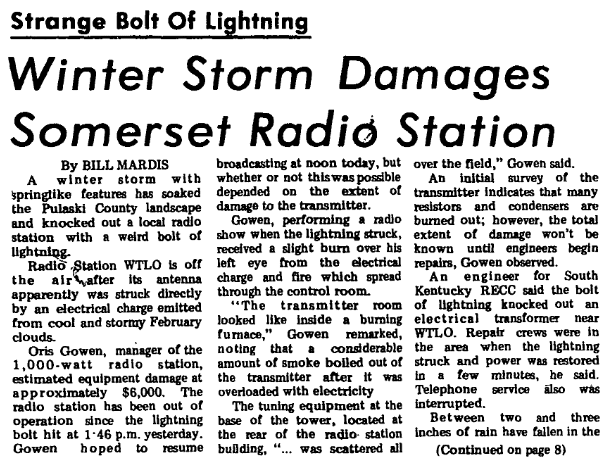
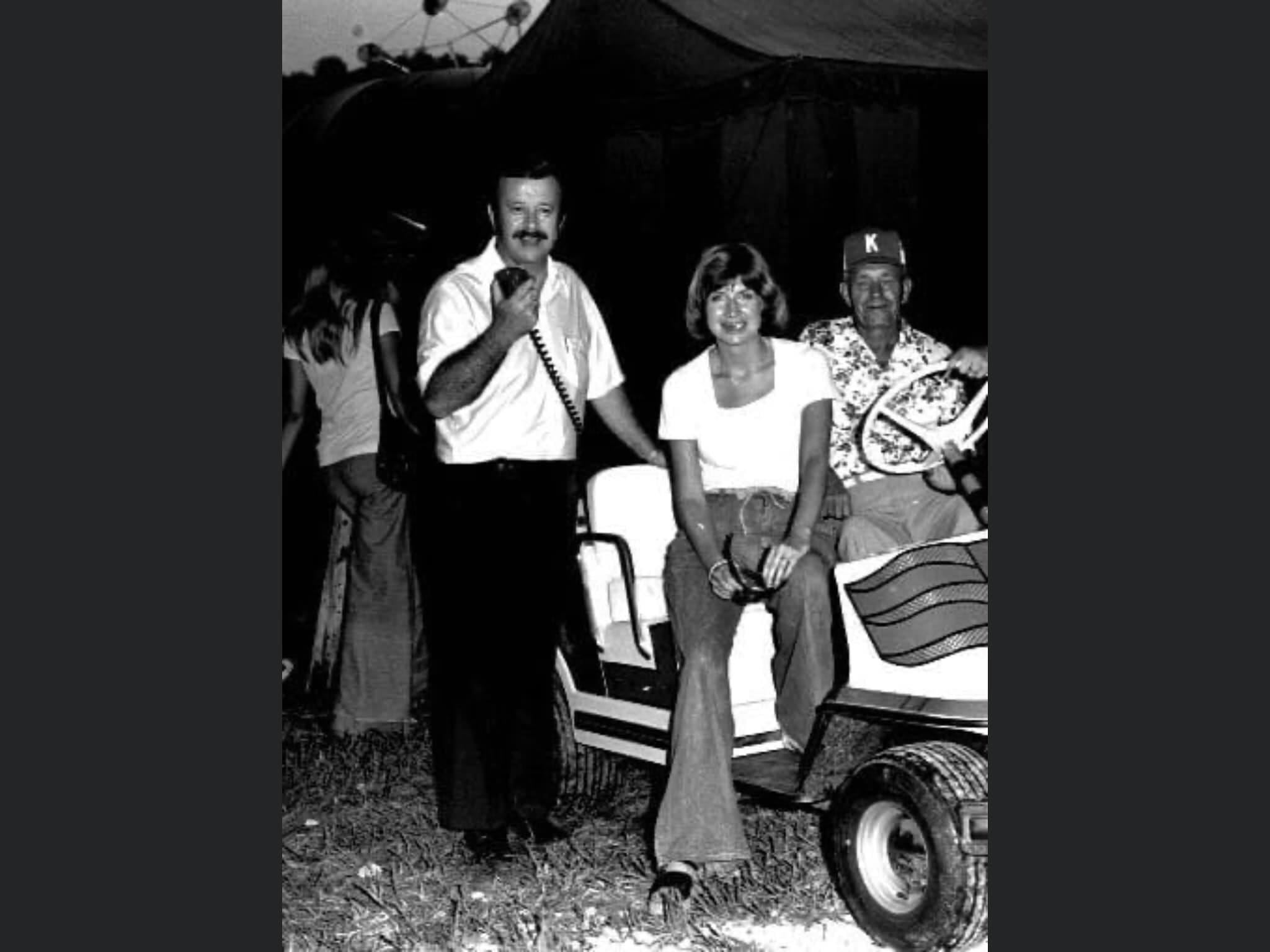
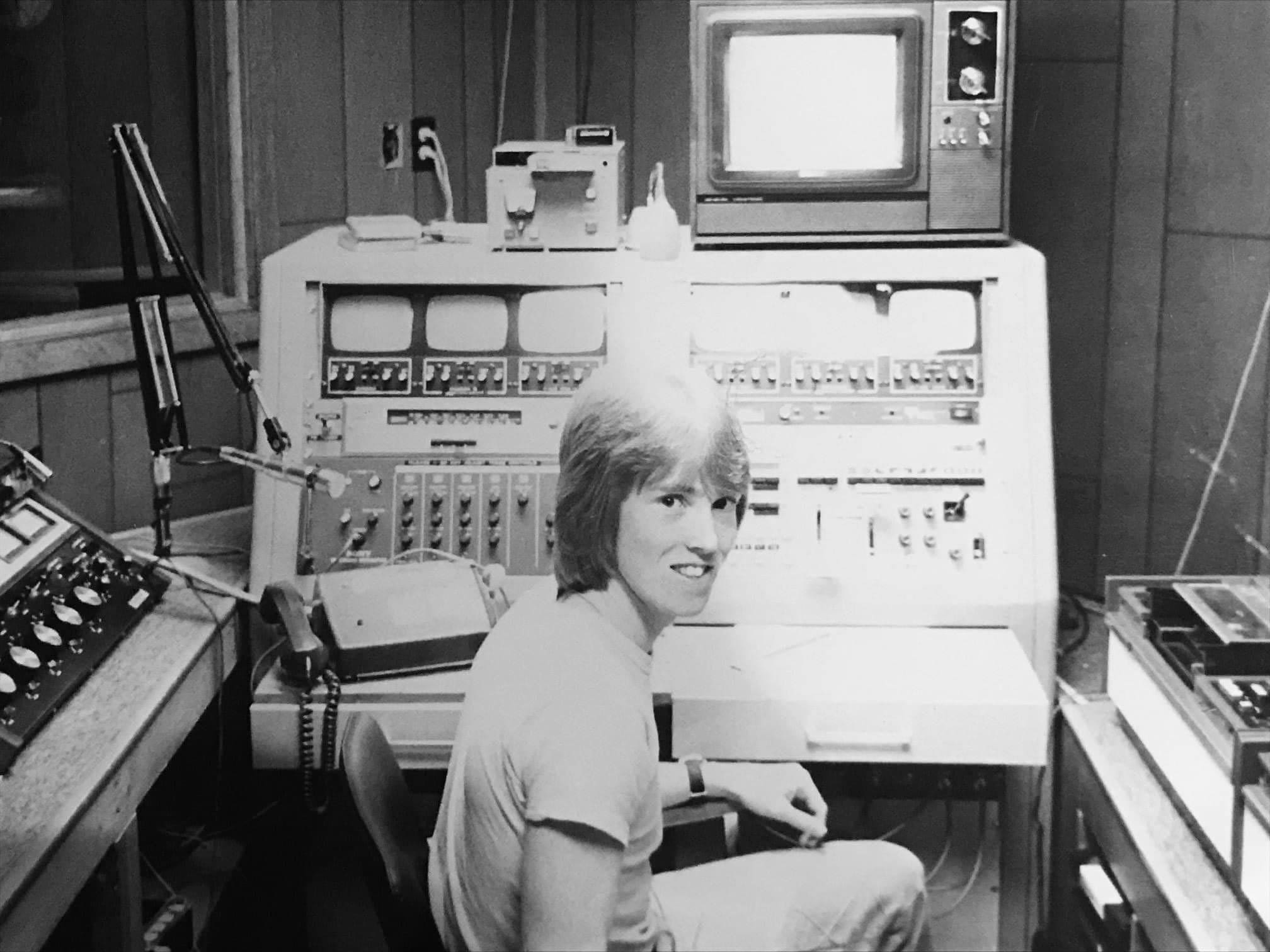
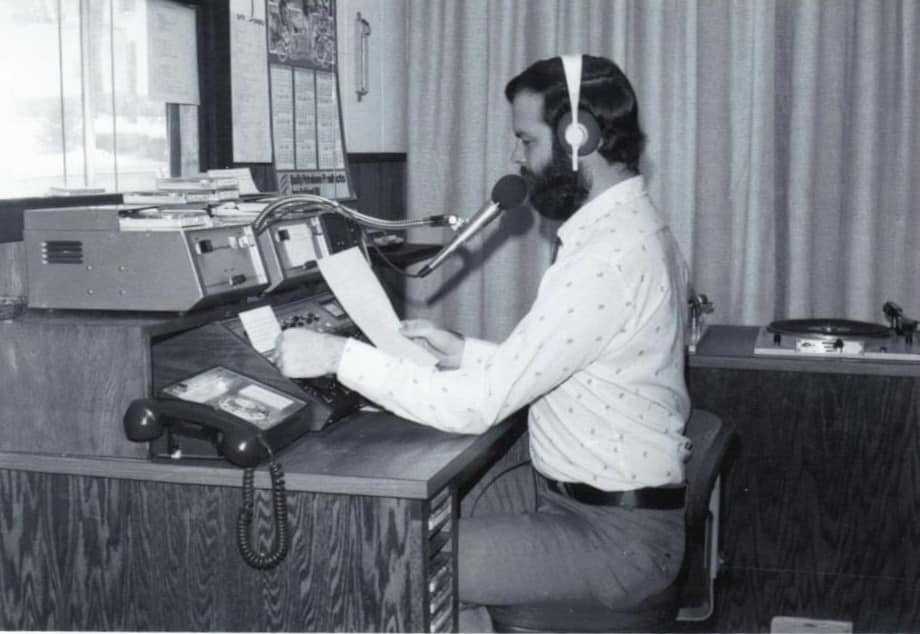
On Thursday, February 24, 1972, at approximately 1:46 PM, lighting struck an antenna at WTLO. The massive electrical surge from the strike caused a fire in the control room and damage to the transmitter. The equipment located outside below the antenna was broken and scattered across the ground. WTLO Manager, Oris Gowen had been live on the air at the time of the strike and subsequent fire that led to a burn above his eye. The estimated damage at the time was $6,000. Today, adjusting for inflation, the damages would have been estimated to be close to $44,000.
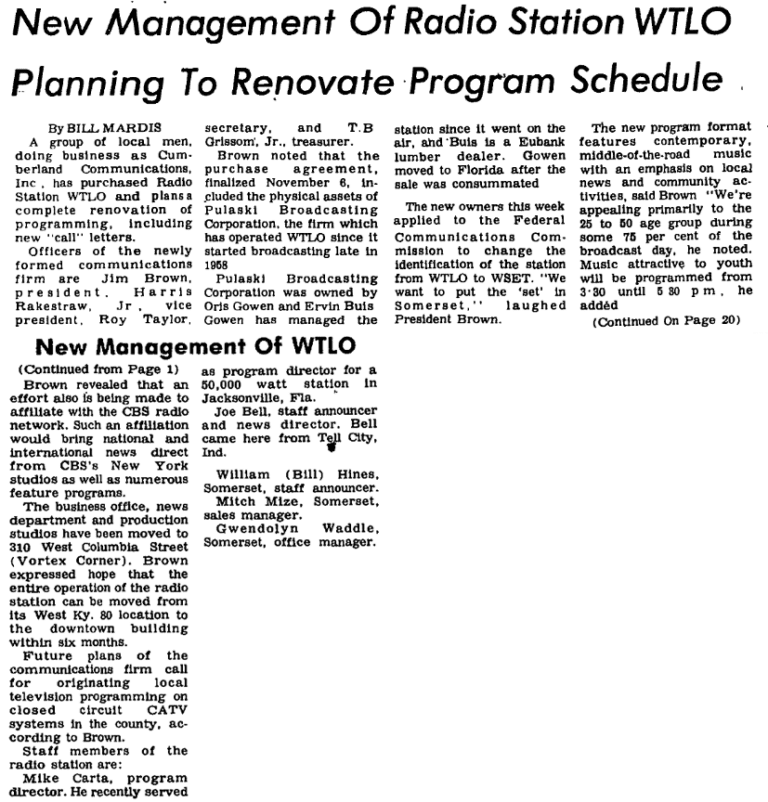
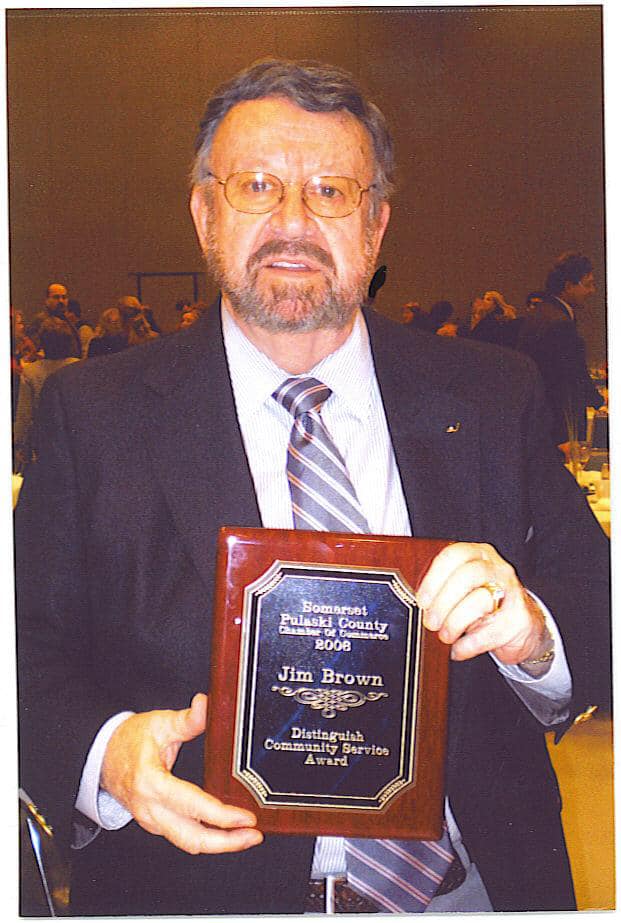
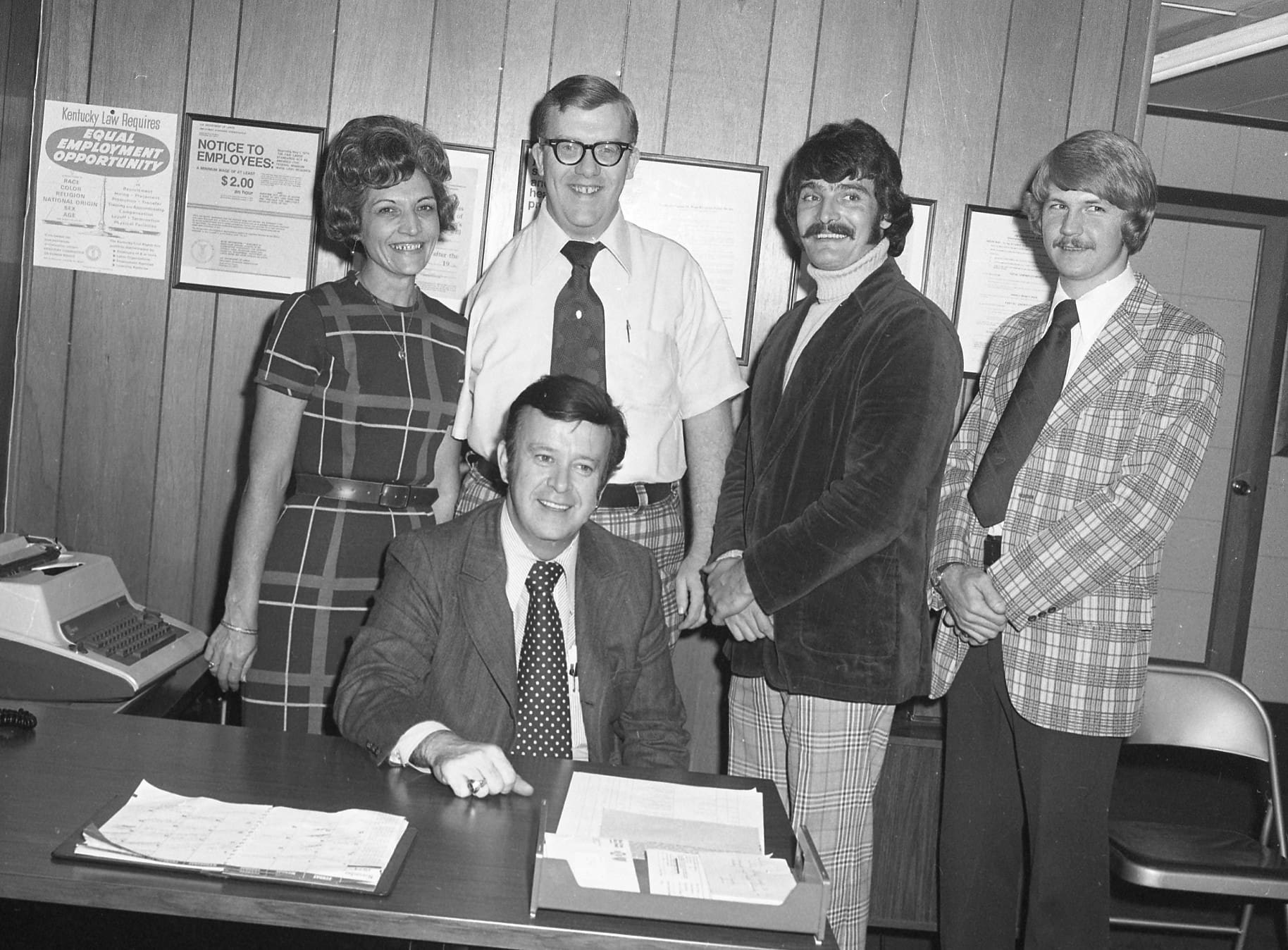
Cumberland Communications was formed by Jim Brown,
President, Harris Rakestraw Jr., Vice President, Roy Taylor, Secretary, and T.B Grissom Jr., Treasurer.
Plans for WTLO included a renovation and contemporary programming. Also, an application was filed with the Federal Communications Commission to change the call letters from WTLO to WSET. In an article from The Commonwealth Journal, Jim Brown said, “We want to put the ‘set’ in
Somerset.”
Staff:
Mike Carta, Program
Director, Joe Bell, Staff Announcer and News Director, William (Bill) Hines, Staff Announcer, Mitch Mize, Sales Manager, and Gwendolyn Waddle, Office Manager.
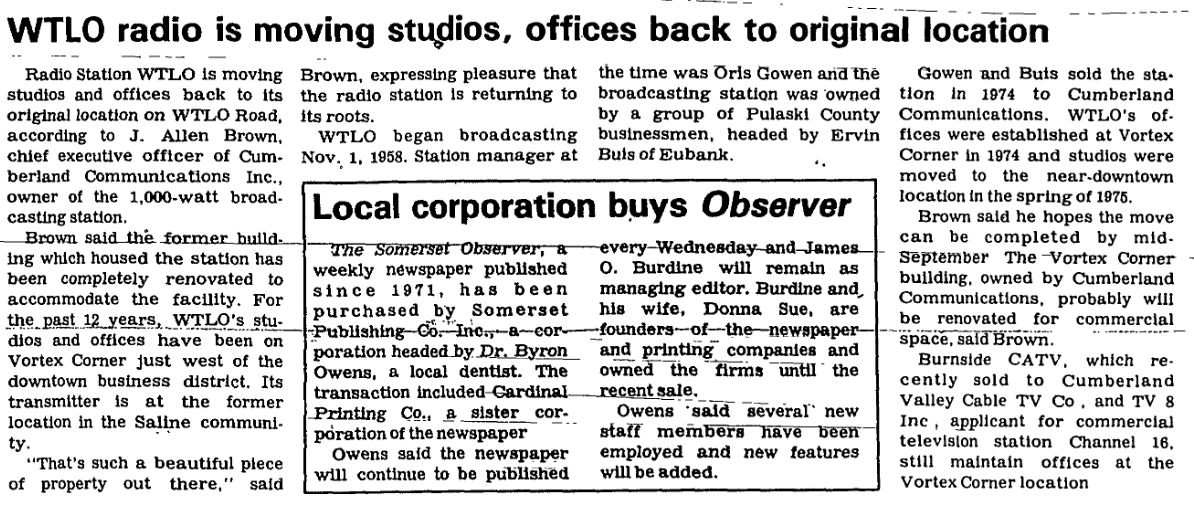
Although the offices of Cumberland Communications and WTLO had already relocated to 310 W. Columbia Street (Vortex Corner) in Somerset at the end of 1974, WTLO had still been broadcasting from its original location in the Saline Community (where WTLO is currently located.)
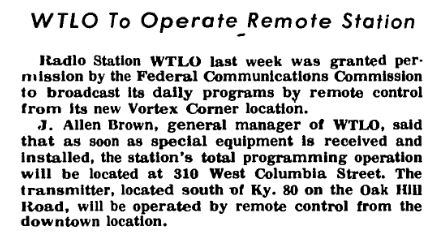
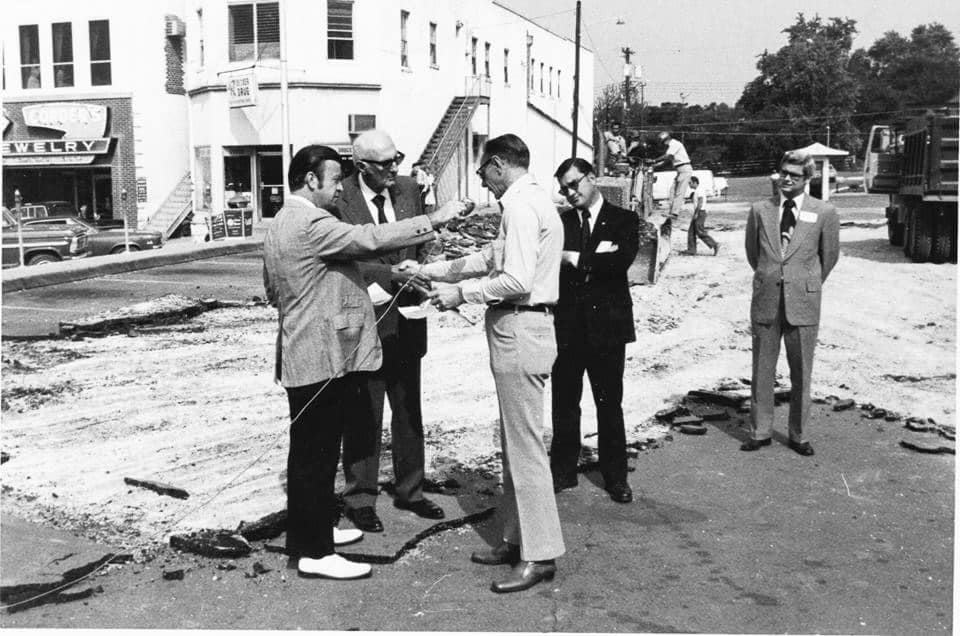
At the very end of April 1975, the FCC granted WTLO a license to broadcast remotely from what would become WTLO’s new home at Vortex Corner. WTLO began broadcasting from Columbia Street as soon as the specialized equipment was received and installed sometime in May 1975 by estimation.


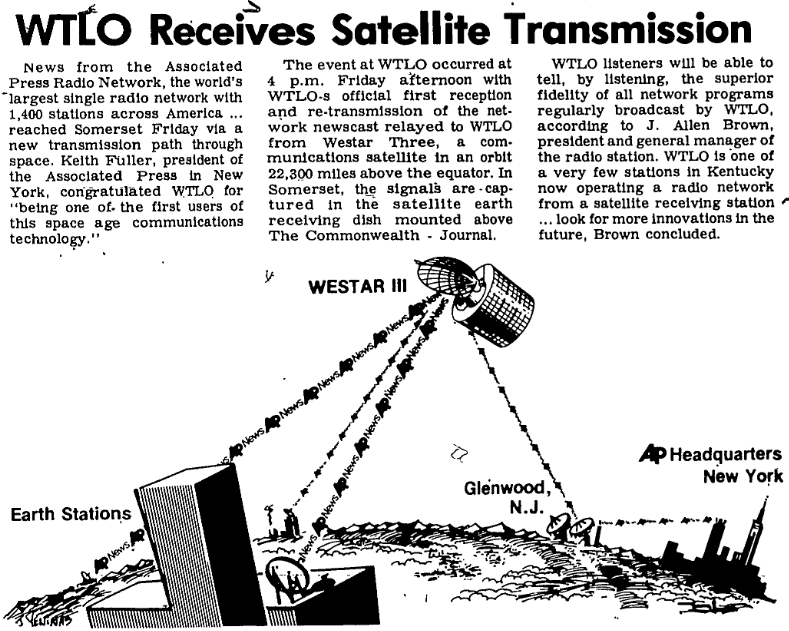
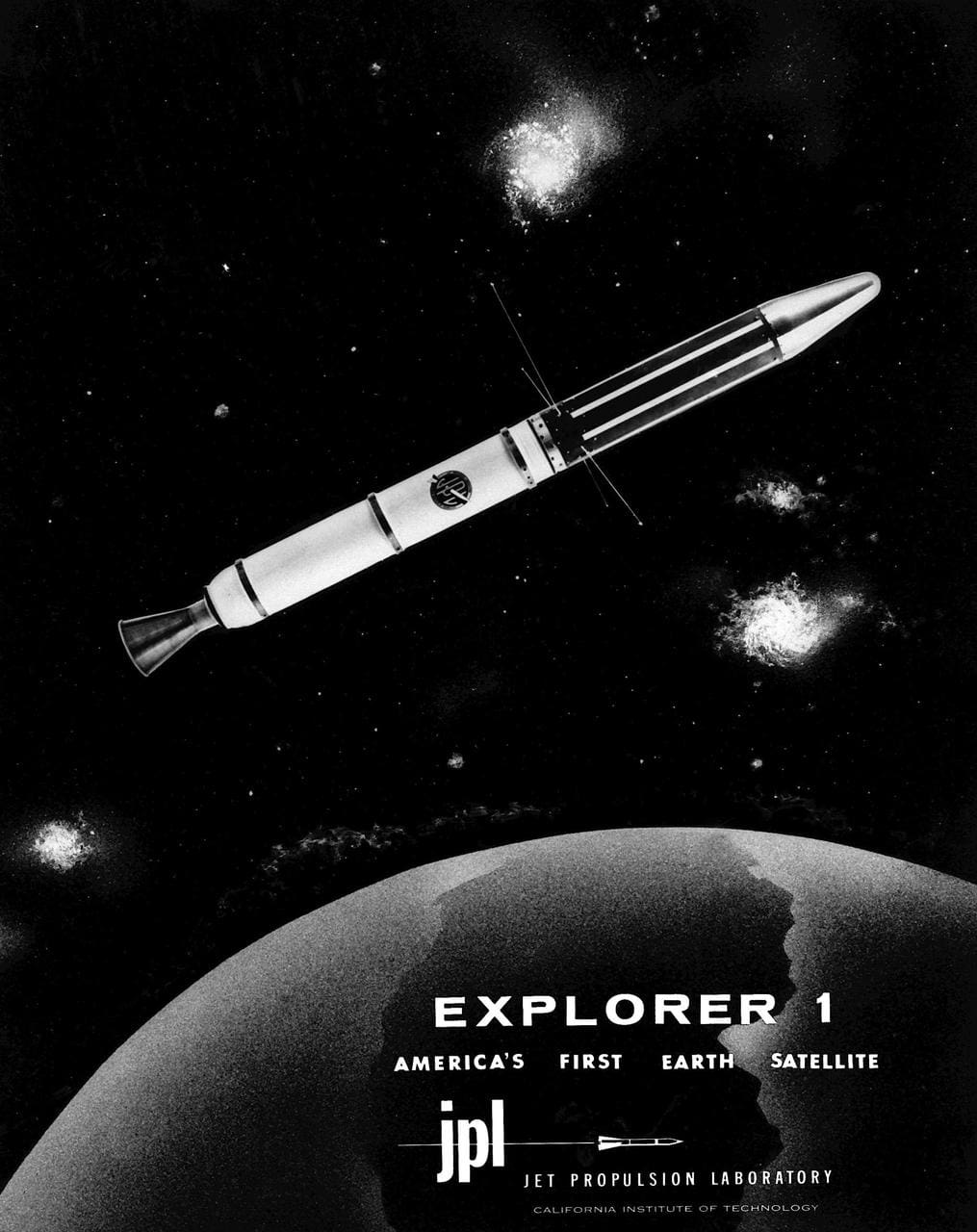
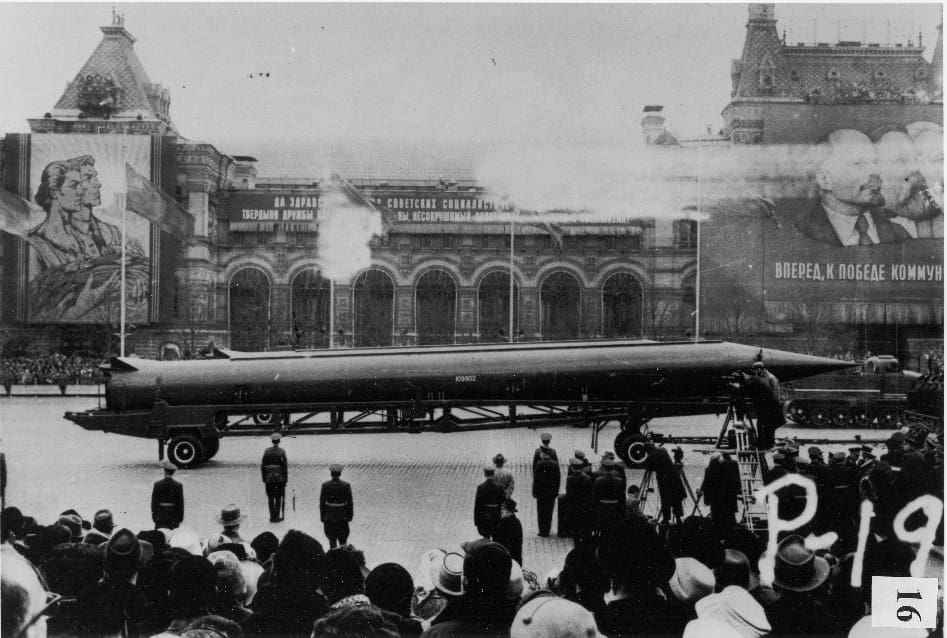
Approximately three months after the Soviet Union launched Sputnik, the United States successfully launched Explorer 1. There would be a Cold War space race between the two superpowers as they built ever more sophisticated orbital communications devices as they sent more satellites into space.
Top Ten Billboard Year-end Songs of America 1958
1 “Volare (Nel blu dipinto di blu)” Domenico Modugno
2 “All I Have to Do Is Dream” / “Claudette” The Everly Brothers
3 “Don’t” / “I Beg of You” Elvis Presley
4 “Witch Doctor” David Seville
5 “Patricia” Perez Prado
6 “Sail Along, Silv’ry Moon” / “Raunchy” Billy Vaughn
7 “Catch a Falling Star” / “Magic Moments” Perry Como
8 “Tequila” The Champs
9 “It’s All in the Game” Tommy Edwards
10 “Return to Me” Dean Martin
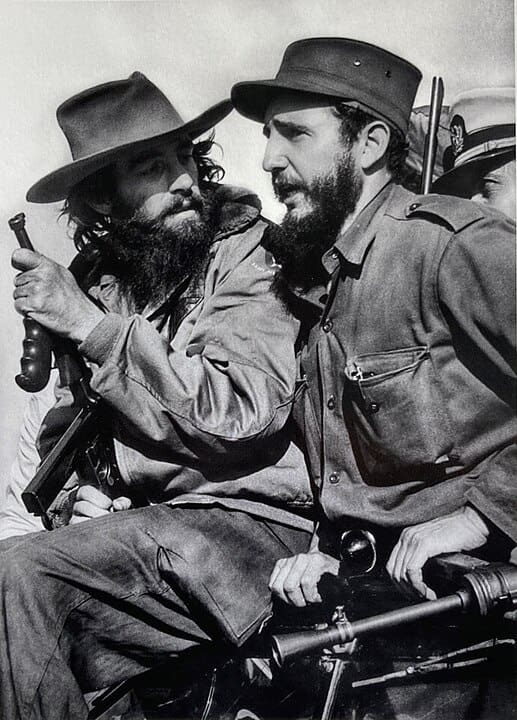
As Fidel Castro’s forces advance on Havana, the U.S.-backed dictator Fulgencio Batista flees. The rebels led by Ché Guevara and Camilo Cienfuegos enter the city a few days later, followed by Castro’s forces two days later, which quickly consolidate power, establishing Cuba’s first communist government.
Keystone
Jan 3: Alaska becomes 49th State
Aug 21: Hawaii becomes 50th State
Top Ten Billboard Year-end Songs of America 1959
1 “The Battle of New Orleans” Johnny Horton
2 “Mack the Knife” Bobby Darin
3 “Personality” Lloyd Price
4 “Venus” Frankie Avalon
5 “Lonely Boy” Paul Anka
6 “Dream Lover” Bobby Darin
7 “The Three Bells” The Browns
8 “Come Softly to Me” The Fleetwoods
9 “Kansas City” Wilbert Harrison
10 “Mr. Blue” The Fleetwoods
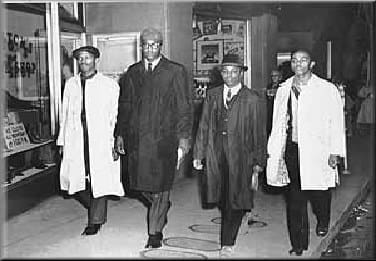
Food service was denied to four African American college students – Ezell A. Blair, Franklin E. McCain, Joseph A. McNeil, and David L. Richmond – when they sit down at a Woolworth’s lunch counter in Greensboro, North Carolina. By the summer of 1963, the lunch counter was desegregated after a six-month protest led by the young men who refused to leave. A section of the lunch counter at the Greensboro Woolworth’s was donated to the Smithsonian in 1993.
97453745@N02 / PHOTO CREDIT: 1 | 2
Top Ten Billboard Year-end Songs of America 1960
1 “Theme from A Summer Place” Percy Faith
2 “He’ll Have to Go” Jim Reeves
3 “Cathy’s Clown” The Everly Brothers
4 “Running Bear” Johnny Preston
5 “Teen Angel” Mark Dinning
6 “I’m Sorry” Brenda Lee
7 “It’s Now or Never” Elvis Presley
8 “Handy Man” Jimmy Jones
9 “Stuck on You” Elvis Presley
10 “The Twist” Chubby Checker
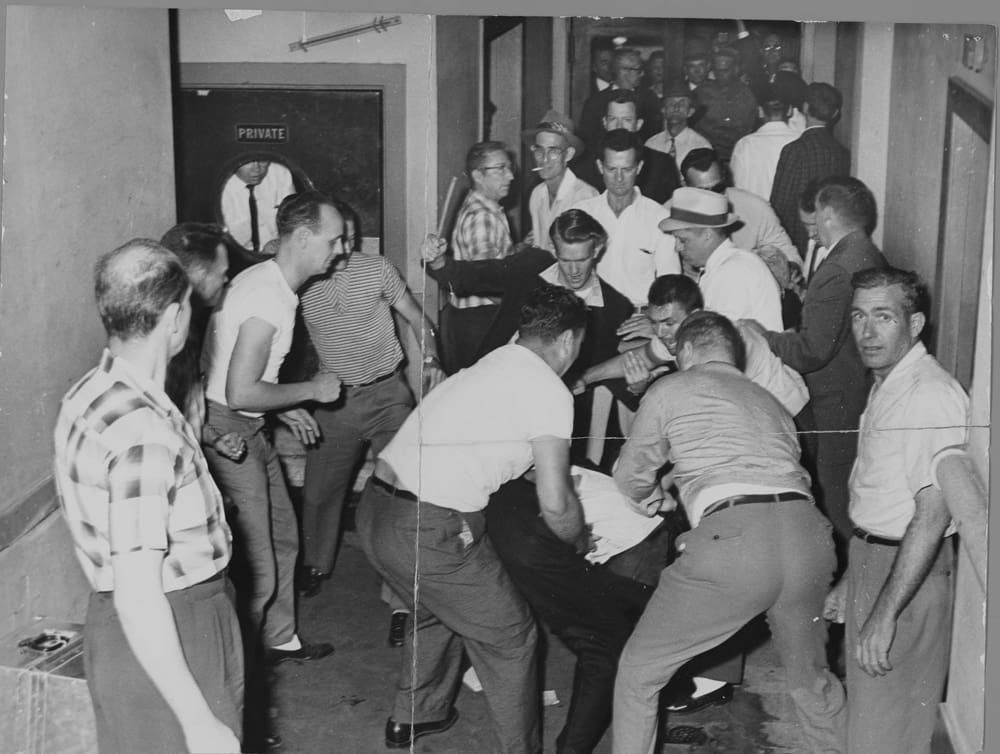
Civil rights activists, known as the Freedom Riders, a mixed-race group of volunteers sponsored by the Committee on Racial Equality—travel on buses through the South in order to protest racially segregated interstate bus facilities.
The Freedom Riders bravely rode interstate buses in the South, challenging local laws and customs that enforced segregation. The resulting violent reactions only served to strengthen the American Civil Rights Movement’s credibility. By drawing national attention to the disregard for federal law and the use of violence to enforce segregation, these rides shed light on a major issue in the southern United States. Despite being arrested by police for various alleged offenses such as trespassing and violating state and local Jim Crow laws, the riders often faced initial attacks from white mobs without any intervention from law enforcement.
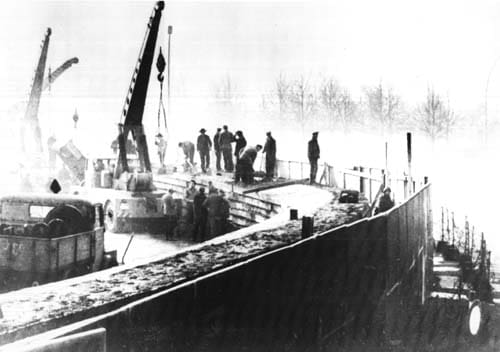
In the late summer of 1961, East Germany faced a dire situation as skilled workers, including teachers, engineers, and doctors, continued to defect to the West, reaching crisis proportions. On August 12th, a staggering 2,400 East Germans crossed into West Berlin, marking the highest single-day exodus. The following day, with the blessing of Soviet Premier Nikita Khrushchev, East Germany erected a 27-mile-long wall across Berlin, forcibly separating families and friends for nearly three decades. This infamous barrier became an enduring emblem of the Cold War, later invoked by Presidents John Kennedy and Ronald Reagan to rally support for the cause of a divided city.
Keystone
Top Ten Billboard Year-end Songs of America 1961
1 “Tossin’ and Turnin’” Bobby Lewis
2 “I Fall to Pieces” Patsy Cline
3 “Michael” The Highwaymen
4 “Crying” Roy Orbison
5 “Runaway” Del Shannon
6 “My True Story” The Jive Five
7 “Pony Time” Chubby Checker
8 “Wheels” The String-A-Longs
9 “Raindrops” Dee Clark
10 “Wooden Heart” Joe Dowell
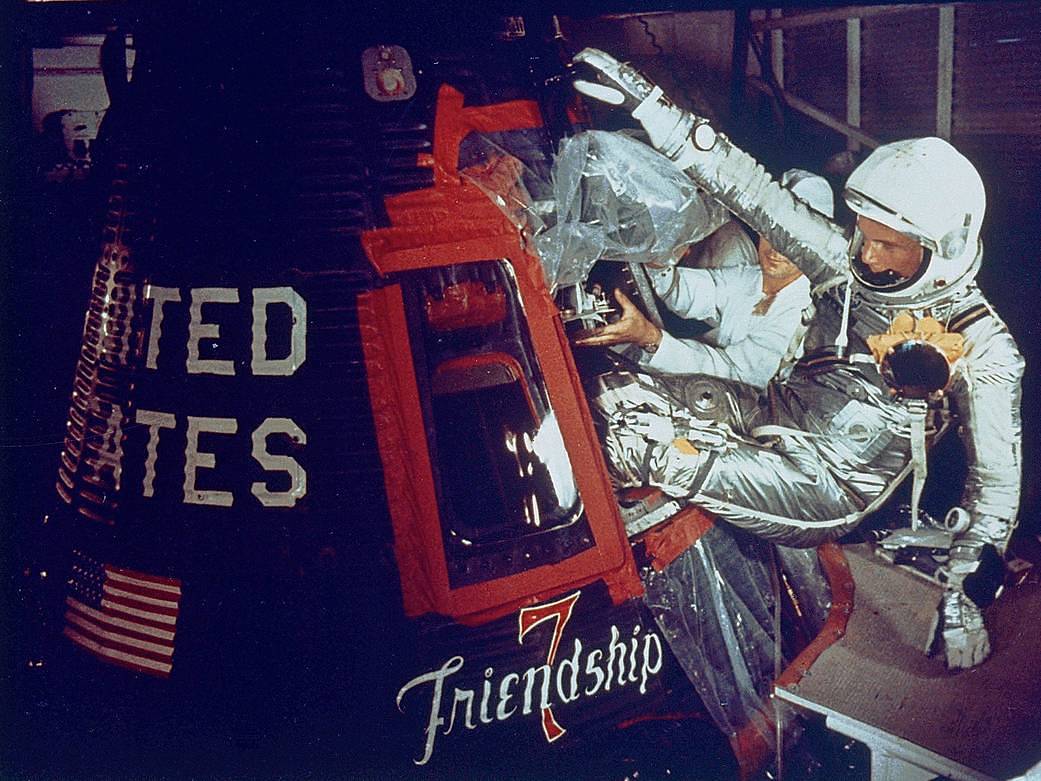
On February 20, 1962, John Glenn became the first American to orbit the Earth. Circling the globe three times, his flight lasted a total of 4 hours, 55 minutes, and 23 seconds before the Friendship 7 spacecraft splashed down in the ocean.
FUN FACT: The book (2016) and subsequent movie (2017), Hidden Figures, is about three brilliant African-American women at NASA — Katherine Johnson, Dorothy Vaughan and Mary Jackson — that served as the brains behind one of the greatest operations in history: the launch of astronaut John Glenn into orbit, a stunning achievement that restored the nation’s confidence, turned around the Space Race and galvanized the world.
PHOTO CREDIT: NASA
Jan 3: Alaska becomes 49th State
Aug 21: Hawaii becomes 50th State
Upon discovering the Soviet Union’s construction of nuclear missile installations in communist Cuba, the Kennedy administration swiftly enforces a naval blockade and urges for their removal. The tense situation is met with a proposal from the Soviets to remove the missiles on the condition that the United States promises not to invade Cuba. Ultimately, a resolution is reached as the U.S. agrees to also withdraw their own missiles from Turkey, avoiding direct military conflict between the two superpowers in what is considered to be a critical moment in history.
Top Ten Billboard Year-end Songs of America 1962
1 “Stranger on the Shore” Acker Bilk
2 “I Can’t Stop Loving You” Ray Charles
3 “Mashed Potato Time” Dee Dee Sharp
4 “Roses Are Red (My Love)” Bobby Vinton
5 “The Stripper” David Rose
6 “Johnny Angel” Shelley Fabares
7 “The Loco-Motion” Little Eva
8 “Let Me In” The Sensations
9 “The Twist” Chubby Checker
10 “Soldier Boy” The Shirelles
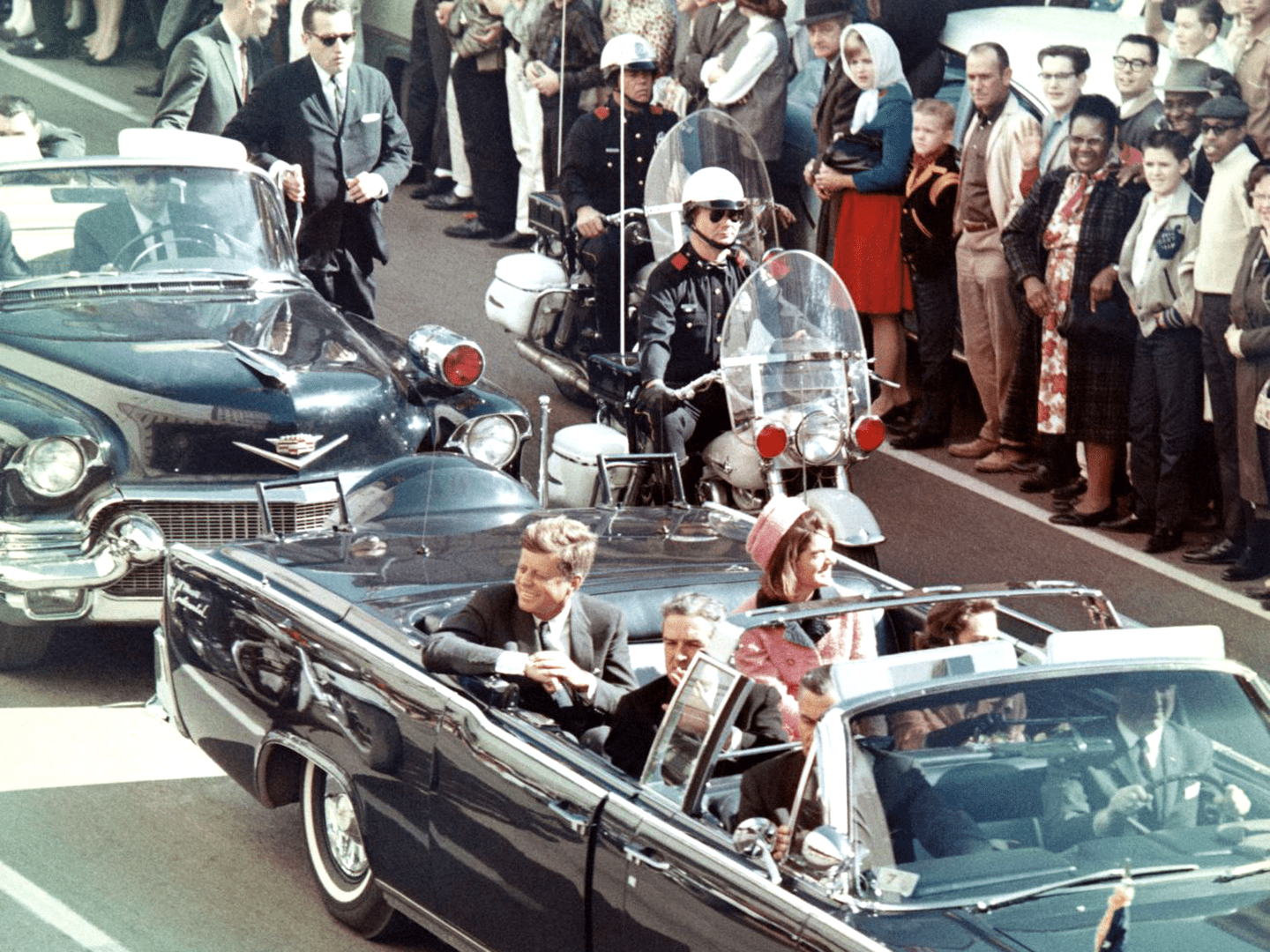
A multi-state tour begins in September 1963 as President John Fitzgerald Kennedy prepares for his re-election campaign. It was about 12:30 p.m. when Lee Harvey Oswald shot him while passing through Dealey Plaza in Dallas. Oswald was murdered two days later by Jack Ruby, the owner of a nightclub.
Keystone
Top Ten Billboard Year-end Songs of America 1963
1 “Surfin’ U.S.A.” The Beach Boys
2 “The End of the World” Skeeter Davis
3 “Rhythm of the Rain” The Cascades
4 “He’s So Fine” The Chiffons
5 “Blue Velvet” Bobby Vinton
6 “Hey Paula” Paul & Paula
7 “Fingertips – Part 2” Little Stevie Wonder
8 “Can’t Get Used to Losing You” Andy Williams
9 “My Boyfriend’s Back” The Angels
10 “Sukiyaki” Kyu Sakamoto
Amid the turmoil of the Vietnam War, President Lyndon B. Johnson strives relentlessly to shift his focus from the conflict to his stated objectives: alleviating poverty, eradicating segregation, and establishing vital social programs such as Medicare. In his January 8, 1964 State of the Union Address, known as the “War on Poverty,” LBJ emphasizes the necessity of addressing poverty, racial injustice, and healthcare for seniors, among other progressive aims.
The Economic Opportunity Act of 1964 bill was presented to Congress in March, 1964. The Senate adopted the House-passed bill on August 20, 1964 and the bill was signed by President Johnson.
Keystone
Top Ten Billboard Year-end Songs of America 1964
1 “I Want to Hold Your Hand” The Beatles
2 “She Loves You” The Beatles
3 “Hello, Dolly!” Louis Armstrong
4 “Oh, Pretty Woman” Roy Orbison
5 “I Get Around” The Beach Boys
6 “Everybody Loves Somebody” Dean Martin
7 “My Guy” Mary Wells
8 “We’ll Sing in the Sunshine” Gale Garnett
9 “Last Kiss” J. Frank Wilson and the Cavaliers
10 “Where Did Our Love Go” The Supremes
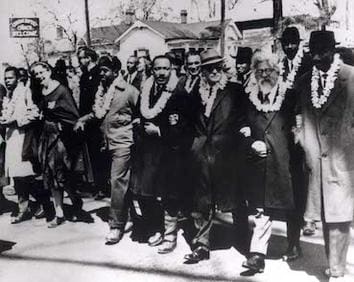
The passing of protester Jimmy Lee Jackson at the hands of an Alabama state trooper ignites a march from Selma to Montgomery, Alabama. With hundreds of civil rights activists joining, this event is later referred to as “Bloody Sunday.” Led by John Lewis, who would go on to serve as a House Democrat from Georgia, and other leaders, the march is met with police confrontation. As the group crosses the Edmund Pettus Bridge, law enforcement responds with tear gas and billy clubs, resulting in 50 injuries and hospitalizations. Sadly, Lewis passed away in July 2020, with his body making one final crossing over the Edmund Pettus Bridge in a horse-drawn carriage.
William Lovelace / PHOTO CREDIT: 1 | 2
Top Ten Billboard Year-end Songs of America 1965
1 “Wooly Bully” Sam the Sham and the Pharaohs
2 “I Can’t Help Myself (Sugar Pie Honey Bunch)” Four Tops
3 “(I Can’t Get No) Satisfaction” The Rolling Stones
4 “You Were on My Mind” We Five
5 “You’ve Lost That Lovin’ Feelin’” The Righteous Brothers
6 “Downtown” Petula Clark
7 “Help!” The Beatles
8 “Can’t You Hear My Heartbeat” Herman’s Hermits
9 “Crying in the Chapel” Elvis Presley
10 “My Girl” The Temptations
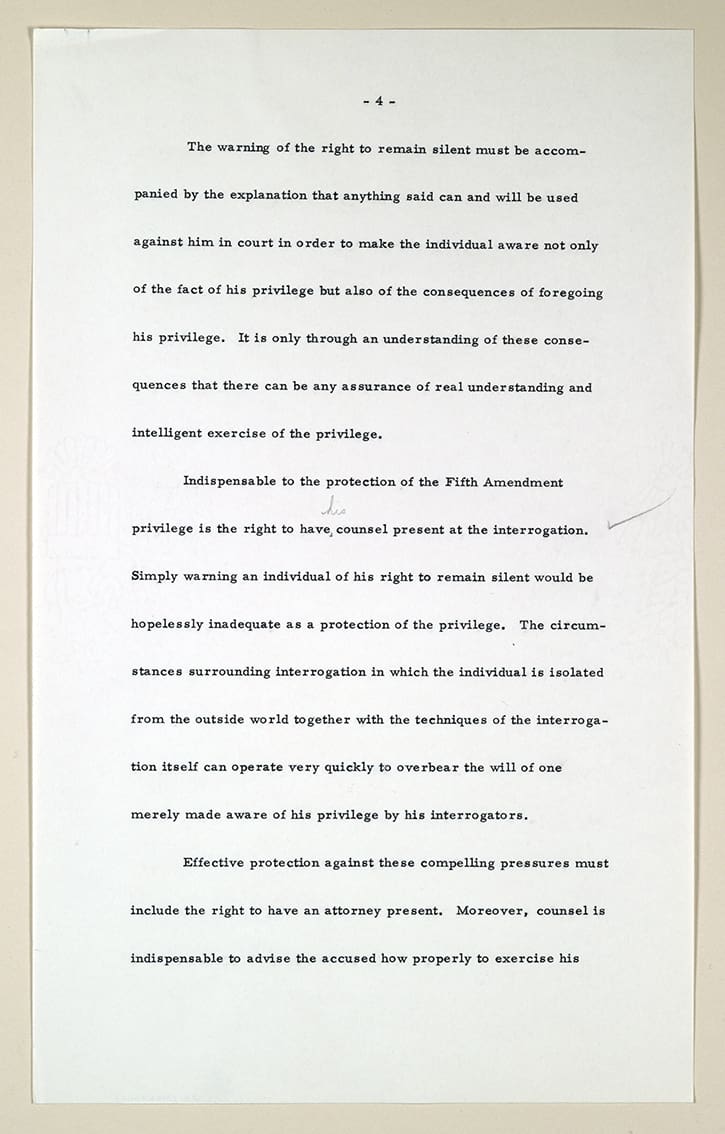
Named for the U.S. Supreme Court’s 1966 decision Miranda v. Arizona, these rights are often referred to as Miranda rights. The purpose of such notification is to preserve the admissibility of their statements made during custodial interrogation in later criminal proceedings. The idea came from law professor Yale Kamisar, who subsequently was dubbed “the father of Miranda.”
Top Ten Billboard Year-end Songs of America 1966
1 “California Dreamin’” The Mamas & the Papas
2 “96 Tears” Question Mark and the Mysterians
3 “What Becomes of the Brokenhearted” Jimmy Ruffin
4 “Last Train to Clarksville” The Monkees
5 “Reach Out I’ll Be There” Four Tops
6 “These Boots Are Made for Walkin’” Nancy Sinatra
7 “Cherish” The Association
8 “Strangers in the Night” Frank Sinatra
9 “Kicks” Paul Revere & the Raiders
10 “The Ballad of the Green Berets” SSgt Barry Sadler
FOR KATE FOR SOURCE INFO TO CITE LATER: https://www.usatoday.com/picture-gallery/life/2020/09/06/the-worlds-most-important-event-every-year-since-1920/42346845/